
Thinking with AIIn beta
On what to hand over to AI, what to keep and how to tell the difference.
One hour for the people setting the terms. Three hours or a full day for the people producing the work.
Your team ships more than it did last year. The documents look right.
Then you start noticing that some of them arrive polished and shallow, that the work of making sense of them moved downstream to whoever reads the doc. You observe some of the most AI-powered team members cannot walk you through how they got there.
This is the cognitive new deal in practice: every use of AI is an exchange, augmentation on one side and cognitive cost on the other, whose terms went unread. The workshop is where a team reads them.
Three questions
Automation clears the tasks that were only ever costing time. What that buys back is capacity and work that was not possible before: a level of ambition that used to need a team, your own craft done at scale. Automation is the on-ramp. Augmentation is the destination.
One recurring set of questions, to delegate with intention.
What could AI do?
The capabilities of AI models are advancing fast. According to the research institute METR, the length of task a model can carry on its own doubles roughly every seven months. A clear view of what is possible is what an aligned capacity framework rests on.
METR, Measuring AI ability to complete long tasks, March 2025
What should it not do?
Where AI should not pick up the work, because the use would not be compliant or would run against how the team or the company works.
What do you want to keep?
Where AI is good enough and you keep the task anyway. AI can do it. That does not settle whether it should. This is JONA, the Joy of Not Automating: the heart of an AI practice that is both intense and sustainable.
What people say
I'm not a big AI fan and I wasn’t sure about the workshop before but I can now see how much AI could support me in my work. It was very clear and empowering, thank you.
From the substance to your vision and the delivery, the way you made complex concepts easy to understand, left a lasting impression.
Margaux provided us with a comprehensive overview of the initial studies on the subject, while also offering practical advice on how to use AI effectively.
The workshop was very well prepared and insightful. The whole team felt both aligned and excited about what AI could do with and for us.
The three formats

One hour, for the people setting the terms
Where the value went, why output has stopped telling you what your people can do and what an organisation has to state out loud.
For a small group who needs the big picture, fast.
Three hours, for the people producing the work
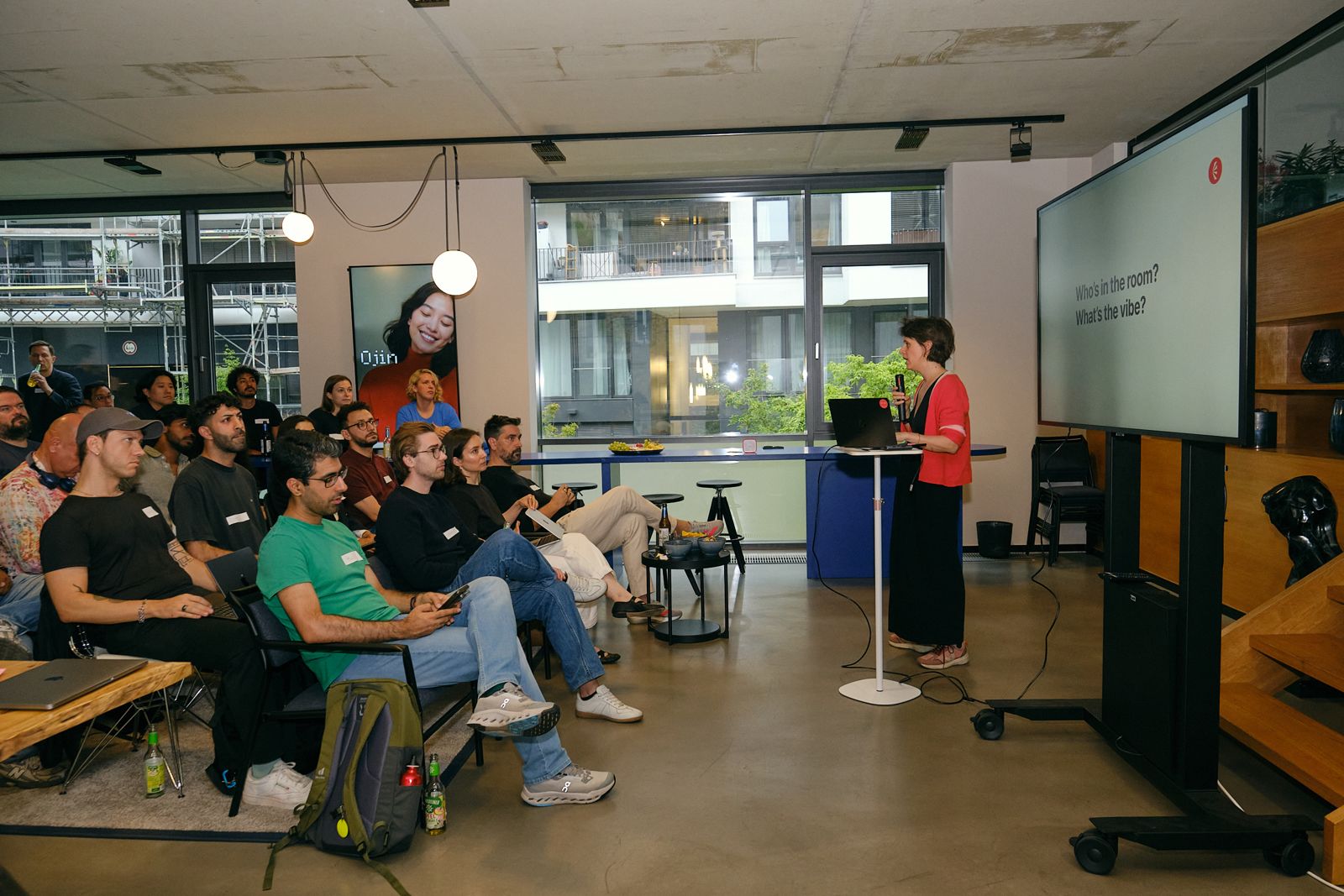
Practical applications and scenarios, along with a clear and consistent framework, to foster psychological safety around AI experimentation and integration.
For a team or department who need to understand what is at stake and what it means in practical terms.
A full day, on site or away
Time to get above it. To put words on the cognitive new deal, and to ask again, deliberately and both alone and together, what AI should actually be used for.
For a team who wants to step back and go further, through alignment.
If the room needs to hear the argument before working on it, that is a different format: the keynote
The glossary
Most teams can feel the change and cannot describe it. That gap is expensive, because nobody makes a decision about something they have no vocabulary for. The glossary is the first tool and it is free. It works before a room. It also works instead of one to get started.
Questions people actually ask
Curious?
Twenty minutes to work out whether this is a fit for you or your team. No deck. If it is not a fit, that is a useful outcome too.